Key Takeaways
- Three categories, three rule sets. Under O.C.G.A. § 40-1-1, Georgia separates motorized carts (≤20 mph, ≤1,300 lb), PTVs (four-wheel, ≤20 mph, ≤1,375 lb, ≤6 passengers), and LSVs (four-wheel electric, 20–25 mph, FMVSS-500 compliant). Each carries different equipment, registration, and insurance obligations.
- Public-road operation requires a valid driver's license. Under O.C.G.A. § 40-6-331, all PTV and motorized-cart operators on Georgia public streets must hold a valid driver's license, except in localities whose pre-2012 ordinance grandfathered unlicensed operation.
- Local authority controls where you can drive. No PTV may operate on a Georgia public road unless the city or county has passed a designating ordinance under § 40-6-331; state highway crossings require Georgia DOT designation.
- Most personal policies do not cover golf carts on the road. Georgia personal auto and homeowner's policies routinely exclude motorized vehicles off the insured premises; only LSVs (electric — optional, gas — required) and specialty cart policies reliably provide coverage.
- Georgia personal-injury claims arising from golf-cart crashes are governed by the two-year statute of limitations under O.C.G.A. § 9-3-33 and the modified comparative-negligence rule under O.C.G.A. § 51-12-33.
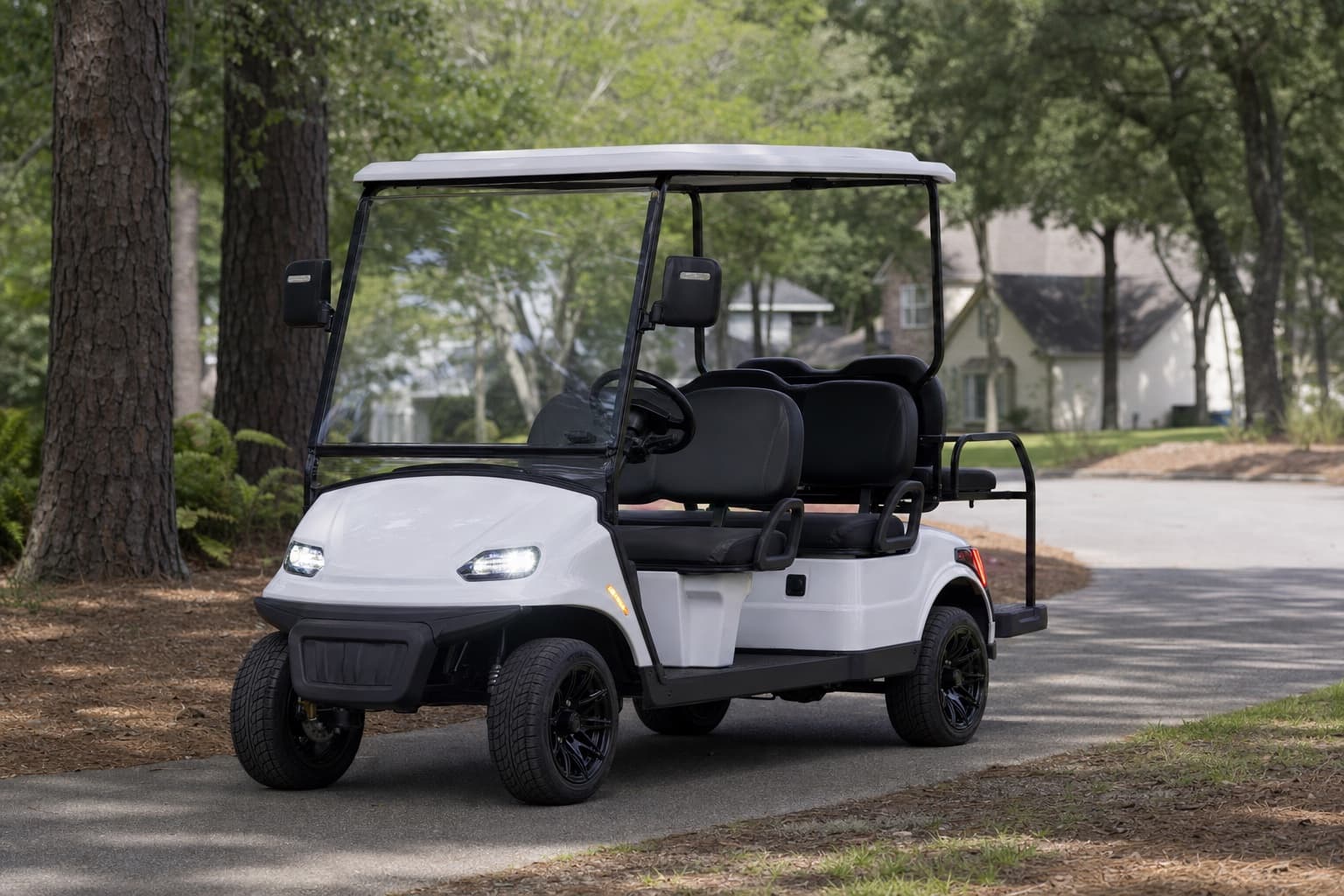
Georgia law recognizes three distinct categories of golf-cart-style vehicles, each with its own rules for licensing, equipment, where you can drive, and what insurance you need: motorized carts, Personal Transportation Vehicles (PTVs), and Low-Speed Vehicles (LSVs). The differences are not academic. They determine whether a 12-year-old can sit behind the wheel, whether you need a driver's license, whether the vehicle must be titled and registered, and whether your existing insurance will cover a crash on a public road. This 2026 guide walks through what Georgia's statutes actually say — citing them by O.C.G.A. section — and clears up the most common mistakes Georgia drivers, owners, and crash victims make.
The three Georgia categories at a glance
The starting point for any question about Georgia golf-cart law is figuring out which statutory category the vehicle falls into. The Georgia Code defines them separately, and each definition flows through to a different rule for equipment, age, license, registration, and insurance.
| Feature | Motorized cart | PTV (Personal Transportation Vehicle) | LSV (Low-Speed Vehicle) |
|---|---|---|---|
| Statute | O.C.G.A. § 40-1-1(33) | O.C.G.A. § 40-1-1(40.1) | O.C.G.A. § 40-1-1(28.1) + 49 CFR § 571.500 |
| Wheels | 3 or more | 4 | 4 |
| Max design speed | 20 mph | <20 mph | 20–25 mph |
| Unladen weight | ≤1,300 lb | <1,375 lb | <3,000 lb GVWR |
| Max passengers | Statute silent | 6 | Per FMVSS seat belts |
| Power source | Electric or gas | Electric or gas | Electric only |
| State title / registration required? | No | No (local registration only) | Yes — state title and registration |
| Driver's license required on public roads? | Yes, under § 40-6-331 | Yes, under § 40-6-331 | Yes (operates as a motor vehicle) |
| Max road speed limit for legal operation | 35 mph (PTV rules apply) | 35 mph (§ 40-6-331) | 35 mph (state DPS) |
| State insurance mandate | No (local ordinance may require) | No (local ordinance may require) | Gas — yes; electric — not statutorily required |
The PTV and motorized-cart definitions overlap substantially. In practice, most modern street-driven Georgia golf carts meet the PTV definition and are governed by Part 3 of Article 13, Chapter 6 of Title 40 — sections § 40-6-330, § 40-6-330.1, and § 40-6-331. The LSV is a separate animal entirely — federally defined, federally equipped, and treated by Georgia DPS as a registered motor vehicle.
What Georgia law actually says — O.C.G.A. § 40-6-330 et seq.
Part 3 of Article 13 (Special Provisions for Certain Vehicles) is the core PTV/motorized-cart statute set. Three sections do the heavy lifting:
§ 40-6-330 — Definitions
O.C.G.A. § 40-6-330 supplies the part-specific definitions for "PTV path," "PTV operator," and related terms. It establishes that the statute governs motorized carts and PTVs as a unit, and references back to the master definitions in § 40-1-1.
§ 40-6-330.1 — Required equipment
O.C.G.A. § 40-6-330.1 sets the minimum equipment standards for a PTV operating on a designated public path or street. The statute includes a grandfather clause for vehicles in service before the 2011 amendment, but new PTVs must meet the current list (covered in the equipment section below).
§ 40-6-331 — Where you can drive, who can drive, and signage
O.C.G.A. § 40-6-331 is the section that does the most practical work. It establishes four critical rules:
- Local-authority gate. A local governing body (municipality or county) must pass an ordinance designating specific streets or PTV paths for combined PTV-and-vehicle use before any PTV operation on those streets is lawful. Without that ordinance, the street is off-limits.
- Driver's license requirement. All PTV operators must possess a valid driver's license. The only exception is for localities whose pre-January 1, 2012 ordinance authorized unlicensed operation — a narrow grandfather clause.
- State highway crossings. Motorized carts and PTVs may cross Georgia state highway system roads only at locations designated by the Georgia Department of Transportation, and only when local ordinance permits.
- Signage. Local authorities must post signage indicating PTV-designated streets, including any unique operating restrictions.
The statute also explicitly authorizes the use of PTVs by commercial delivery companies on designated paths — a 2019 amendment that opened the door to delivery-cart pilots in PTV-rich communities.
Who can drive a golf cart in Georgia?
The single most-mangled question in Georgia golf-cart guides is who can legally drive one. The right answer depends on where the cart is being driven.
On Georgia public streets
You must hold a valid driver's license. § 40-6-331 says so directly. The narrow exception is for localities that adopted a pre-2012 ordinance permitting unlicensed operation — and even those local ordinances cannot waive the underlying state requirement everywhere; they apply only on the streets specifically designated by that locality. The "12-year-olds can drive with supervision" rule that circulates on consumer-facing pages is not Georgia law for public-road operation. It conflates private-property and golf-course rules with road law.
On a private golf course or private property
Georgia statute does not set a minimum operator age for golf courses or private property. The course or property owner sets the rules. Most major courses require operators to be at least 16 or hold a valid driver's license, but that is a policy choice — not a statutory mandate.
In gated or master-planned communities
The community's own deed restrictions and HOA rules govern. Some communities (Peachtree City being the prominent example) require local registration before any cart operates within community boundaries. Local ordinance, not state law, sets the age and license rules in these contexts.
DUI law applies regardless
O.C.G.A. § 40-6-391 — Georgia's DUI statute — applies to any moving vehicle, including golf carts. A DUI in a golf cart carries the same penalties as a DUI in a car: license suspension, fines, jail time, and a permanent criminal record. The Georgia State Patrol regularly cites operators for DUI on community paths.
Have Questions About Your Case?
Get a free consultation with an experienced Georgia accident attorney.
Required equipment for street-legal Georgia golf carts
Equipment requirements split sharply between LSVs (federally specified) and PTVs/motorized carts (state-specified, with local overlays).
LSV equipment (49 CFR § 571.500 / FMVSS-500)
Every LSV manufactured for sale in the United States must come from the factory equipped with:
- Headlamps
- Front and rear turn signal lamps
- Taillamps
- Stop lamps
- Reflex reflectors (red rear; red or amber side; white or amber front)
- An exterior mirror on the driver side, plus either an interior rearview mirror or a passenger-side exterior mirror
- A parking brake
- A windshield meeting Federal Motor Vehicle Safety Standard No. 205
- A 17-character vehicle identification number meeting Federal Motor Vehicle Safety Standard No. 115
- A Type 1 or Type 2 seat belt assembly at each designated seating position
If the vehicle is not FMVSS-500 compliant, it is not an LSV under Georgia or federal law. It cannot be titled or registered as one, and cannot legally operate on roads above the motorized-cart speed cap.
PTV equipment (O.C.G.A. § 40-6-330.1)
PTVs in regular service after the 2011 amendment must be equipped with:
- A braking system sufficient to control the vehicle
- A reverse warning device functional whenever the vehicle is in reverse
- A main power switch (key, electronic lock, push-button code)
- Headlights
- Tail lamps
- A horn
- Hip restraints and hand holds for each seat
- A rearview mirror
The grandfather clause in § 40-6-330.1 exempts pre-2011 PTVs from the post-2011 retrofit, but any PTV operating on a designated road today must still meet whatever the local ordinance requires, which in most communities tracks the post-2011 list.
Where can you drive a golf cart on Georgia roads?
The road-access question is governed entirely by the local-ordinance gate in § 40-6-331. The default rule under Georgia law is that motorized carts and PTVs may not operate on a public road. Local authorities — cities and counties — open that door by passing a designating ordinance. Three constraints apply:
- 35 mph speed-limit cap. PTVs are restricted to streets with posted speed limits of 35 mph or less. Higher-speed roads are categorically off-limits.
- No interstate or limited-access highways. Period. PTVs and motorized carts are barred from interstate highways and limited-access state routes regardless of any local ordinance.
- State highway crossings only at GDOT-designated points. Where a PTV path or designated local street crosses a Georgia state highway, the crossing must be at a location specifically designated by the Georgia Department of Transportation.
LSVs operate under Georgia DPS rules for low-speed vehicles and may operate on any Georgia road with a posted speed limit of 35 mph or less, regardless of whether the local authority has passed a PTV-designating ordinance.
Peachtree City: Georgia's model golf-cart community
The clearest demonstration of how Georgia's local-ordinance framework works in practice is Peachtree City in Fayette County. The city has built a 100+ mile multi-use path network explicitly designed for combined pedestrian, bicycle, and motorized-cart use. According to the city's own data, more than 10,000 households in Peachtree City own a registered cart — a higher density of personal-cart ownership than any other Georgia municipality.
Peachtree City's ordinance, adopted under the authority of § 40-6-331, sets the rules that every cart operator inside the city limits must follow:
- Registration required. Every cart must be registered with the city and display a city-issued decal. As of an October 2025 ordinance amendment, decals must be affixed to both the front and rear of the cart.
- 3-year renewal cycle. The current renewal cycle covers 2026–2028. Renewal notices for the $45 three-year period were mailed in January 2026, with payment due by March 31, 2026.
- Operator age and license rules. Per local ordinance, operators must be at least 12 years old with adult supervision, 15 years old with a learner's permit, or 16 years old with a valid driver's license. This is the local-ordinance grandfather rule § 40-6-331 contemplates — and it applies only inside Peachtree City limits.
- Equipment requirements. Working headlights and taillights for any operation between sunset and sunrise; functional brakes; horn; and rearview mirror.
The city operates a "Navigate PTC" mobile app to help residents and visitors locate cart paths and stay within designated areas. Other Georgia municipalities — including Senoia, Tybee Island, Vidalia, McRae-Helena, and parts of Sandy Springs — have passed varying PTV ordinances, but none approach Peachtree City's scale or path-network sophistication.
Registration, title, and insurance — what's required and what isn't
This is the section where Georgia's three-category system causes the most expensive mistakes.
LSVs (electric, FMVSS-500 compliant)
LSVs are treated as state-registered motor vehicles. To title and register an LSV in Georgia, the owner must submit the manufacturer's certificate of origin or a valid certificate of title to their county tag office. The certificate must reflect a 17-digit VIN and identify the vehicle as an electric low-speed vehicle. Once registered, the LSV carries a Georgia license plate and is subject to standard renewal.
- Electric LSVs: According to Georgia DPS guidance, electric LSVs are not statutorily required to carry proof of insurance — though carrying liability coverage is strongly recommended because the registered-vehicle status means any operating accident triggers standard tort exposure.
- Gas-powered LSVs: Required to carry proof of insurance, meeting Georgia's minimum motor vehicle financial responsibility requirements: $25,000 bodily injury per person / $50,000 bodily injury per accident / $25,000 property damage, under O.C.G.A. § 33-7-11.
PTVs and motorized carts
The state does not require title, state registration, or state-level insurance for PTVs or motorized carts. The local authority sets those rules through its designating ordinance under § 40-6-331. Peachtree City requires local registration and a decal; many smaller municipalities require nothing more than that the cart meet equipment standards.
The insurance trap
This is the single most-expensive misconception in Georgia golf-cart law: most personal homeowner's policies expressly exclude motorized land vehicles once they leave the insured premises. Most personal auto policies exclude vehicles that are not registered passenger automobiles. A cart driven on a Peachtree City multi-use path or any designated Georgia street is typically uncovered by either policy unless the owner has added a specialty golf-cart endorsement.
The federal Consumer Product Safety Commission tracked 17,500 emergency department-treated golf-cart injuries in 2022 — a 12% increase from 2021 — and approximately 15,000 ED visits per year on a rolling basis. 31.2% of those injuries are to children under 16, and falls from the cart cause 38.3% of all golf-cart injuries (American Journal of Preventive Medicine, Watson et al., 2008). When those injuries happen on a public Georgia road, the question of which policy responds — and whether any policy responds — is rarely the answer the owner expected.
What happens when a golf cart causes a Georgia crash
Golf-cart crashes are governed by the same Georgia tort framework as any motor vehicle collision, with a few wrinkles unique to the three-category system.
- Statute of limitations. Two years from the date of injury under O.C.G.A. § 9-3-33. The clock does not pause because the vehicle is "just a golf cart."
- Comparative negligence. O.C.G.A. § 51-12-33 — Georgia's modified comparative-negligence rule — bars recovery if the injured party is 50% or more at fault. Apportionment among multiple defendants (cart driver, cart owner, premises owner) is the norm.
- Premises liability overlay. If the crash occurs on a golf course or HOA path, the property owner's duty of care to the cart operator and passengers may also be in play. A poorly maintained cart path, an unmarked hazard, or an unsafe golf-course layout can support a separate claim against the property owner.
- Negligent entrustment. Where a cart owner allows a person who is unlicensed, intoxicated, or otherwise unfit to operate, Georgia law recognizes a claim for negligent entrustment against the owner.
- Coverage cascade. Crash victims must work through the layered policies in order: the cart's own policy (if any), the cart owner's umbrella, the operator's auto/umbrella, the property owner's premises policy, and any third-party tortfeasor's auto policy. Understanding what to do in the first hours after a Georgia golf-cart accident often determines what coverage stays available.
Catastrophic injuries — particularly traumatic brain injuries from ejection or rollover — are disproportionately common in golf-cart crashes because the vehicles lack airbags, structural roll protection, and effective restraints. The most common golf-cart accident injury patterns reflect this design gap.
Practice pointer
"Most golf-cart crash victims I talk to assumed their auto policy or homeowner's insurance would cover the injuries. It almost never does. The coverage gap on these vehicles is the single biggest financial trap families discover only after a serious crash — and by then, the medical bills are already running."
— Mark Wade, Managing Partner, Georgia Auto Law
A Georgia personal injury attorney's first job in a golf-cart case is to map every potentially responsive policy — cart, homeowner's, auto, umbrella, premises, employer — before the carrier denials start. Waiting until after the denials arrive narrows the strategic options dramatically. For a Fayette County or Peachtree City golf-cart crash, the local-ordinance overlay also creates evidence requirements (registration records, ordinance compliance) that have to be preserved early.
Frequently Asked Questions
What's the difference between a golf cart, a PTV, and an LSV in Georgia?
A motorized cart (O.C.G.A. § 40-1-1(33)) is a three- or four-wheel vehicle capped at 20 mph and 1,300 pounds. A Personal Transportation Vehicle (O.C.G.A. § 40-1-1(40.1)) is a four-wheel motorized cart with stricter weight (1,375 lb) and passenger (6) limits. A Low-Speed Vehicle (O.C.G.A. § 40-1-1(28.1)) is a four-wheel electric vehicle with a top speed of 20–25 mph that complies with federal safety standard FMVSS-500 (49 CFR § 571.500), carries a 17-digit VIN, and must be titled and registered with Georgia.
Do you need insurance on a golf cart in Georgia?
It depends on the category. Gas-powered LSVs must carry liability insurance meeting Georgia's $25,000/$50,000/$25,000 minimum under O.C.G.A. § 33-7-11. Electric LSVs are not statutorily required to carry insurance, per Georgia DPS. PTVs and motorized carts are subject only to whatever the local registering authority requires — most municipalities require none. But because personal auto and homeowner's policies almost always exclude golf carts on public roads, a specialty cart policy is the practical answer regardless of what the state mandates.
What is the minimum age to operate a golf cart on Georgia public roads?
There is no single statewide minimum age, because § 40-6-331 generally requires a valid driver's license to operate a PTV or motorized cart on Georgia public streets. The only exception is for localities whose pre-January 1, 2012 ordinance authorized unlicensed operation. Peachtree City, for example, allows operators as young as 12 with adult supervision within city limits — but that is a local rule and does not apply on roads outside Peachtree City.
Can a 12-year-old drive a golf cart in Georgia?
On a private golf course or private property, age rules are set by the property owner. On public Georgia streets, no — unless the operator is on a Peachtree City designated path or in another grandfathered locality. The general state rule under § 40-6-331 requires a valid driver's license.
Are golf carts allowed on Georgia public roads?
Only on streets that the local city or county has specifically designated for PTV or motorized-cart use through an ordinance under O.C.G.A. § 40-6-331. The road's posted speed limit must be 35 mph or less. Interstate highways and limited-access state routes are off-limits regardless of local ordinance.
What equipment is required for a street-legal golf cart in Georgia?
For a PTV, O.C.G.A. § 40-6-330.1 requires a braking system, reverse warning device, main power switch, headlights, tail lamps, horn, hip restraints, hand holds, and a rearview mirror. For an LSV, federal standard 49 CFR § 571.500 (FMVSS-500) requires headlamps, turn signals, taillamps, stop lamps, reflectors, mirrors, a parking brake, a windshield, a 17-digit VIN, and seat belts at every seating position.
Does my homeowner's insurance cover a golf cart accident on a public road?
Almost never. Most Georgia homeowner's policies exclude motorized land vehicles once they leave the insured premises. The few policies that include some off-premises coverage typically cap it at very low limits. The reliable answer is a specialty cart or LSV endorsement.
Does my auto insurance cover my golf cart?
Generally no. Personal auto policies typically exclude vehicles that are not registered passenger automobiles. A registered LSV may qualify because it carries a Georgia license plate, but most insurers still require a separate rider. Confirm in writing before relying on auto coverage.
Do I need a title and registration for my golf cart in Georgia?
Only for LSVs. PTVs and motorized carts are not state-titled or registered. Local ordinances (like Peachtree City's) may require local registration and a decal. LSVs require state title, state registration, license plate, and a 17-digit VIN-bearing certificate of origin or title.
Can I be charged with DUI on a golf cart in Georgia?
Yes. O.C.G.A. § 40-6-391 — Georgia's DUI statute — applies to any moving vehicle, including golf carts. Penalties match those for a DUI in a car: license suspension, fines, jail, and a permanent criminal record. Officers regularly cite operators for DUI on community paths.
What is the speed limit for a golf cart in Georgia?
The vehicle's design speed caps operation: motorized carts and PTVs are capped at 20 mph; LSVs at 25 mph. The road on which they operate must have a posted speed limit of 35 mph or less. PTVs cannot operate on streets posted above 35 mph.
How dangerous are golf cart accidents in Georgia?
The U.S. Consumer Product Safety Commission tracks roughly 15,000 to 17,500 emergency-department-treated golf-cart injuries per year nationwide — a 12% increase from 2021 to 2022. About 31.2% of those injuries are to children under 16, 38.3% are from falls out of the cart, and roughly 13% require hospitalization. Catastrophic outcomes — including traumatic brain injury, spinal injury, and wrongful death — are well-documented in the Georgia case literature.
Who is liable when a golf cart hits me in Georgia?
Liability under Georgia's modified comparative-negligence rule (O.C.G.A. § 51-12-33) typically falls on the cart operator first, but can extend to the cart owner (negligent entrustment), the property owner (premises liability for unsafe paths or hazards), the employer (vicarious liability for commercial operation), or a third-party tortfeasor (motorist who caused the cart driver to swerve). Whether you should contact an attorney after a golf-cart accident usually depends on how many of these parties may be involved.
What's the deadline to file a golf-cart accident lawsuit in Georgia?
Two years from the date of injury under O.C.G.A. § 9-3-33. Claims against local government entities (for a path defect, signage failure, or municipal vehicle) require an ante-litem notice within six months under the Georgia Tort Claims Act and similar municipal-notice statutes.