
Key Takeaways
- Georgia personal-injury claims from car accidents must be filed within two years under O.C.G.A. § 9-3-33; wrongful-death claims share the same deadline.
- According to the Centers for Disease Control and Prevention, motor vehicle crashes remain a leading cause of death and disability nationwide — proper documentation in the first hours after a crash heavily influences outcomes.
- Modified comparative negligence under O.C.G.A. § 51-12-33 means insurance adjusters will argue any percentage of fault they can attach to you. Counter-evidence (scene photos, witness statements, dashcam) is what reduces that percentage.
- A crash that results in injury, death, or apparent property damage over $500 triggers mandatory reporting under O.C.G.A. § 40-6-273 — the police report is foundational evidence.
- If you were injured in a Georgia crash, a Georgia car accident lawyer can evaluate insurance coverage, fault allocation, and damages — initial consultations through our contact page are free and confidential.
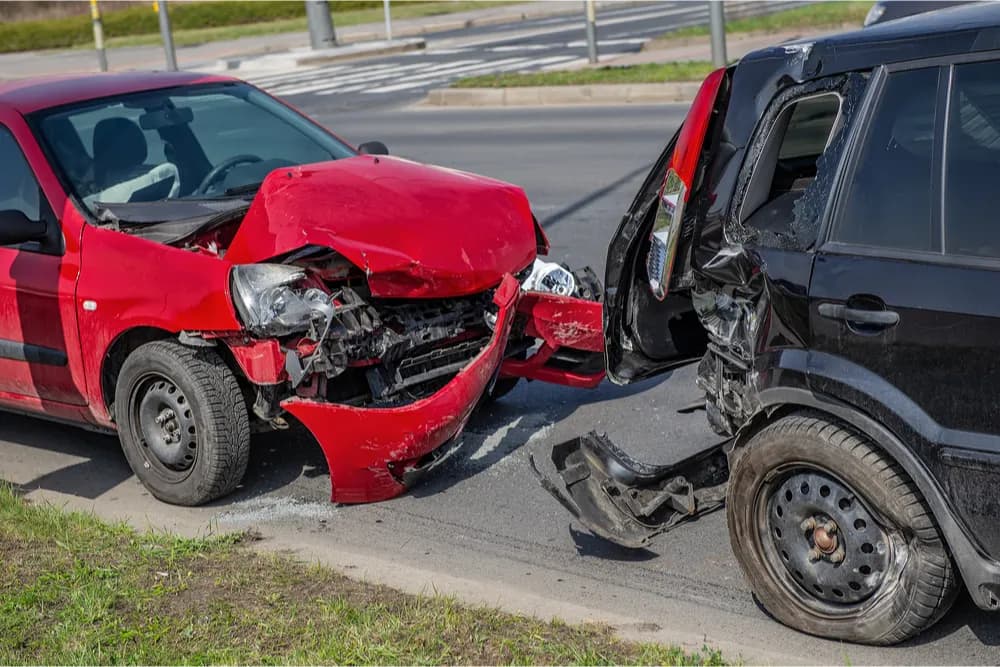
According to the Centers for Disease Control and Prevention, more than 1.7 million cases of traumatic brain injuries (TBIs) occur annually in the US. Around 300,000 cases are due to car accidents, including rear-end collisions.
The force from a rear-end collision can push the head into hard surfaces in the vehicle, resulting in injury.
TBIs after rear-end car accidents can affect victims for years. Repercussions may be far-reaching and include lost wages and steep medical bills. Read on to learn more about TBIs.
What is a Traumatic Brain Injury?
A traumatic brain injury is any type of head trauma resulting from a sudden bump, blow or jolt to the head (also known as the primary or initial injury). The force from the impact disrupts normal brain function for a period, causing myriad symptoms.
Open head injury from bashing the head against the steering wheel is a common cause.
The impact injury can damage specific parts of the brain tissue, injure the entire brain, or cause a skull fracture. A secondary injury follows after the brain swells in response to the impact injury, causing limited blood flow. Accident victims need urgent attention because the secondary-stage injury is usually worse than the primary injury.
Sudden blows to the head are not the only cause of primary injuries regarding TBI. Whiplash is responsible for the injuries in 20% of cases. Whiplash causes a sprain that can tear blood vessels in the back and neck, leading to traumatic injuries in brain tissues. This is known as diffuse axonal injury.
Types of Car Accident TBI
“Traumatic brain injury” is a broad term referring to various head traumas sustained after a car accident. However, all TBIs are not the same. There are three main types, which are:
**Mild TBI (concussion). **Mild TBI is minor brain trauma or head injury following a car crash. It causes headaches, temporary memory loss, concentration issues, and short-term balance. The injury typically heals in less than two months.
**Moderate TBI and post-concussion syndrome (PCS). **This is more severe trauma to the brain cells, with symptoms lasting a few months to a year.
**Severe TBI. **The most serious type of traumatic brain injury can cause an accident victim to lose consciousness for days or weeks. It may also lead to permanent brain damage.
Symptoms of Traumatic Brain Injury
The symptoms of TBI following a rear-end car accident can range from mild to debilitating. Some of the symptoms are immediately visible at the scene of the accident, while others take some time to appear. Getting treatment as quickly as possible is essential because the symptoms often worsen without treatment.
Symptoms of Mild Traumatic Brain Injury
Mild TBI such as contusion or concussion include:
Tinnitus (ringing in the ear)
Sensitivity to sound and light
Temporary loss of consciousness (a few seconds to a few minutes)
Temporary memory loss
Blurred vision
Slurred speech
Nausea or vomiting
Disorientation or confusion
Loss of balance or dizziness
Drowsiness or fatigue
Headaches
Insomnia
These concussion symptoms vary from one person to another; no two traumatic brain injuries will present exactly the same way.
Symptoms of Moderate to Severe Traumatic Brain Injury
The signs of moderate or severe injury are more pronounced and more intense. They also last longer overall. Some of the symptoms include:
Repeated nausea and vomiting
Prolonged loss of consciousness (up to several hours)
Severe headaches which worsen over time
Deep disorientation
Seizures and convulsions
Coma
Fluids draining from ears and nose
Pupil dilation
Unnaturally prolonged sleep
Diagnosis For Traumatic Brain Injury
It’s essential to visit the emergency room after a rear-end car accident. A medical professional will analyze your symptoms and conduct tests to determine your level of consciousness and assess different parts of the brain.
During diagnosis of TBI, the physician will utilize all or some of the following techniques:
**Glasgow Coma Score (GCS). **The test grades an accident victim’s level of consciousness on a 15-point scale. Mild cases receive a score above 13. Moderate cases receive a score between nine and 11, while severe cases receive a score of eight and below.
**Computer Tomography (CT) scan. **These diagnostic imaging tests capture images of different parts of the brain to check for blood clots, bleeding, and skull fractures. They check nerve cells as well. Damage to even one nerve cell can be detrimental.
**Magnetic Resonance Imaging (MRI). **An MRI shows life-threatening changes in the brain that are too small for CT scans to pick up.
Treatment for Traumatic Brain Injuries
Medical care for TBI comes down to the injury’s severity and the brain’s affected parts. Mild TBIs correct after medication and rest.
Medical treatment for moderate or severe TBI may require surgery to treat swelling or bleeding in the brain and avoid more serious injuries.
Your insurance company may take care of the treatment (in addition to other costs due to motor vehicle crash) depending on the total cost. Otherwise, you may need to reach out to the driver behind the steering wheel in the other vehicle.
**Recovery from Car Accident TBI **
Recovery from moderate to severe head injuries after an auto accident is expensive and complicated. It also takes a lot of time. Insurance providers may not cover all the medical bills.
Family members and loved ones may also feel the weight of this burden as the injured person recovers. Some accident victims recover in a few weeks, while others take months or years to make a full recovery. That much missed work can severely impact finances.
Work With an Experienced Accident Lawyer
If you suffered a TBI after a rear-end car accident, you should contact an experienced car accident lawyer.
An accident attorney understands the impact of TBI on your life, relationships, and finances. They can help you seek compensation for lost wages, cost of injury treatment, cost of repairs, and more. The lawyer will itemize all expenses, negotiate with your insurance company, or file a lawsuit.
Contact Georgia Auto Law at (404) 662-4949 to discuss your TBI-related motor vehicle accidents today. We serve clients in Atlanta, GA, and nearby areas.
Frequently Asked Questions
What if the at-fault driver has no insurance?
Georgia requires every auto policy to offer uninsured-motorist (UM) coverage under O.C.G.A. § 33-7-11. UM coverage on your own policy pays when the at-fault driver is uninsured, underinsured, or flees the scene. Multiple household policies can sometimes be stacked for higher limits.
Do I need a lawyer for a Georgia car accident claim?
For minor property-damage claims, often no. For any claim involving injuries, missed work, lasting symptoms, or disputed fault, a Georgia personal-injury attorney typically recovers far more than the policyholder would negotiating alone, even after the contingency fee. Initial consultations are free.
Should I give a recorded statement to the other driver’s insurer?
No. The adjuster’s job is to minimize the payout, and recorded statements are mined later for any admission of fault, exaggeration, or inconsistency. You can decline politely and refer them to your attorney or your own insurer.
How is fault determined in a Georgia car accident?
Fault is determined through the police report, scene photos, witness statements, traffic-camera footage where available, vehicle damage patterns, and (for serious crashes) accident-reconstruction analysis. Insurance adjusters apply Georgia’s comparative-negligence rule under O.C.G.A. § 51-12-33 when allocating fault percentages.