
Key Takeaways
- Truck-crash claims in Georgia have a two-year filing deadline under O.C.G.A. § 9-3-33. Evidence preservation letters to the carrier should go out within days to avoid logbook destruction.
- Hours-of-service violations, drug/alcohol test results, dashcam footage, and electronic logging device (ELD) data are unique categories of evidence in truck cases — preserved under FMCSA record-retention regulations.
- According to the Insurance Institute for Highway Safety, occupants of passenger vehicles account for 71% of deaths in two-vehicle crashes involving a large truck, due to the mass and stiffness mismatch.
- Georgia's modified comparative negligence rule (O.C.G.A. § 51-12-33) applies, but liability can extend beyond the driver to the carrier, broker, shipper, and maintenance contractor.
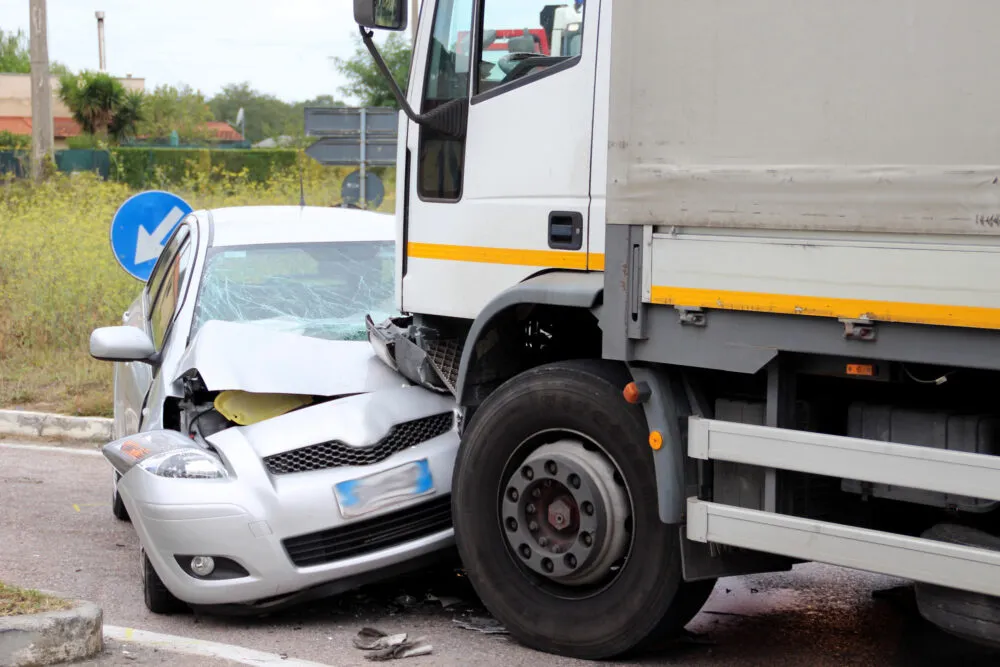
Have you recently been hit by a commercial vehicle and looking to seek compensation for the damage and injuries you sustained? Do you wonder what you should do after the commercial truck accident takes place? If so, then you need to learn all you can about commercial vehicle accidents.
Doing so can play a pivotal role in getting compensated for the damage you endured. The steps you take (and the timing of it) after the crash can make or break your case.
See below for an in-depth guide highlighting everything you need to know regarding car crashes that involve commercial vehicles.
What Are Commercial Vehicle Accidents?
Did you know that there is an average of 6 million car accidents that occur in the United States every year? More shockingly, 3 million people involved in those crashes sustain serious injury and statistics report that more than 90 people die in car accidents every day.
Needless to say, car accidents shouldn’t be taken lightly. It’s unclear how many of those annual car accidents involve commercial vehicles, but it’s safe to say that the number is high.
A commercial vehicle accident is exactly that. It refers to any car accident that involves a commercial vehicle of any kind. Contrary to popular belief, that doesn’t just mean large semi-trucks. Commercial vehicle accidents can also include personal delivery vehicles, small work trucks, ride-share vehicles and the like.
The most common commercial vehicle accident occurs when someone has been injured in a truck or commercial vehicle accident. If that’s you, then you’re entitled to a certain level of compensation.
If you’ve been involved in commercial vehicle accidents of any kind, be sure to reach out to a trusted commercial vehicle accident lawyer right away. They’ll help you recover lost finances from damages to your car, injuries you sustained, lost wages, and so much more.
What to Do After Commercial Vehicle Accidents
Whenever you’re involved in a car accident, there will be a lot of stress involved. It’s easy to go into shock about the entire thing.
However, it’s important to remember this: the steps you take now could make or break your case down the line. Here are a few concrete steps to remember if you’re ever involved in a car accident of any kind.
1. Report the Incident
First, make sure everyone’s okay (all parties, not just your own) and get everyone safely off to the side of the road. Do not move your vehicle. Keep it where it is until the police arrive.
Once everyone is safely on the side of the road, call 911 and report the incident. Local law enforcement will arrive to gather a police report.
It’s very important that you only give general details about the incident. Answer their questions honestly, but refrain from adding much more detail until you speak with your lawyer.
2. Remain Calm
As previously mentioned, accidents will bring out a lot of stress and emotion from you, if you let them. It’s important to keep your emotions in check.
Don’t try to point the finger or admit that you’re at fault. Simply give your side of the story to the police officer, then move on to other areas.
If you feel like you need medical attention, do so right away. Don’t apologize to anyone for the accident and, if the other side is hysterical, don’t engage with them. Let their emotions be their inevitable demise, not yours.
3. Gather Evidence for the Case
A significant amount of the evidence you can gather for your case will only be found at the scene. Once you drive away, that evidence is lost.
Take out your smartphone right away and start taking photos of everything you can. That includes your car, their car, the road, the time of day, your injuries, the other party, and their passengers, their license plate, and so on.
If any witnesses stayed behind, be sure to get their name, number, email, and a summary of what they saw.
4. File an Insurance Claim
The last thing you want to do is hide an accident from your insurance company. Even if you aren’t at fault, it’s best to file a claim to get things put into motion.
That said, you shouldn’t spill the beans to them. Only give the necessary details of your case, as everything you say will be documented and recorded by your provider.
Spare the details for everyone but your lawyer. There you’ll have the attorney-client privilege to protect the inner details of your case.
5. Hire a Trusted Lawyer
All that’s left to do is fight! Regardless of whether you believe yourself to be at fault or not, be sure to reach out to an experienced car accident lawyer right away.
Commercial vehicle insurance companies can be hard to work with, so you’ll need legal representation to oversee your settlement process. They can take over communications with the provider to give you more peace of mind. Before you begin, our settlement calculator can help you understand the potential value of your commercial vehicle accident claim.
Once you meet with your lawyer, be sure to give them as much detail as possible. Tell them everything that happened so that they can get a better feel for your case. Once you’re finished, they’ll get right to work on building your case.
Get Compensated for Your Commercial Vehicle Accidents Today
Now that you have seen an in-depth guide on what to do after commercial vehicle accidents, be sure to use this information wisely.
Be sure to read this article for more information on how much lawyers in Georgia charge for accident claims.
We deal exclusively in commercial auto and truck accident cases within Georgia. This gives us an expertise that’s unparalleled by other law teams. Best of all, if you don’t win your case, then you don’t pay a dime.
Frequently Asked Questions
Can I sue both the truck driver and the trucking company?
Yes. Under Georgia respondeat superior law, the trucking company is generally liable for the driver’s on-duty negligence. The carrier also has independent duties to inspect, train, supervise, and route — violations of those duties create direct claims against the company beyond the driver’s actions.
What evidence is unique to truck-accident cases?
Federal regulations from the Federal Motor Carrier Safety Administration require commercial carriers to maintain driver logs, hours-of-service records, electronic logging device (ELD) data, drug and alcohol test results, maintenance records, and post-crash inspection reports. These records have short retention periods and must be preserved by formal demand.
How much insurance do trucking companies carry in Georgia?
Interstate commercial carriers must maintain at least $750,000 in liability coverage under FMCSA regulations — far above the Georgia auto minimum of $25,000. Many carriers exceed the federal floor and carry $1 million or more, which is why truck-crash recoveries can be substantially larger than passenger-vehicle cases.
What causes most large-truck crashes?
According to FMCSA crash data, the leading contributing factors are driver fatigue, unfamiliarity with the route, brake problems, speeding, and distraction. Many of these correlate with violations of federal hours-of-service rules — a logbook audit early in the case can reveal those violations.