Key Takeaways
- Truck-crash claims in Georgia have a two-year filing deadline under O.C.G.A. § 9-3-33. Evidence preservation letters to the carrier should go out within days to avoid logbook destruction.
- Hours-of-service violations, drug/alcohol test results, dashcam footage, and electronic logging device (ELD) data are unique categories of evidence in truck cases — preserved under FMCSA record-retention regulations.
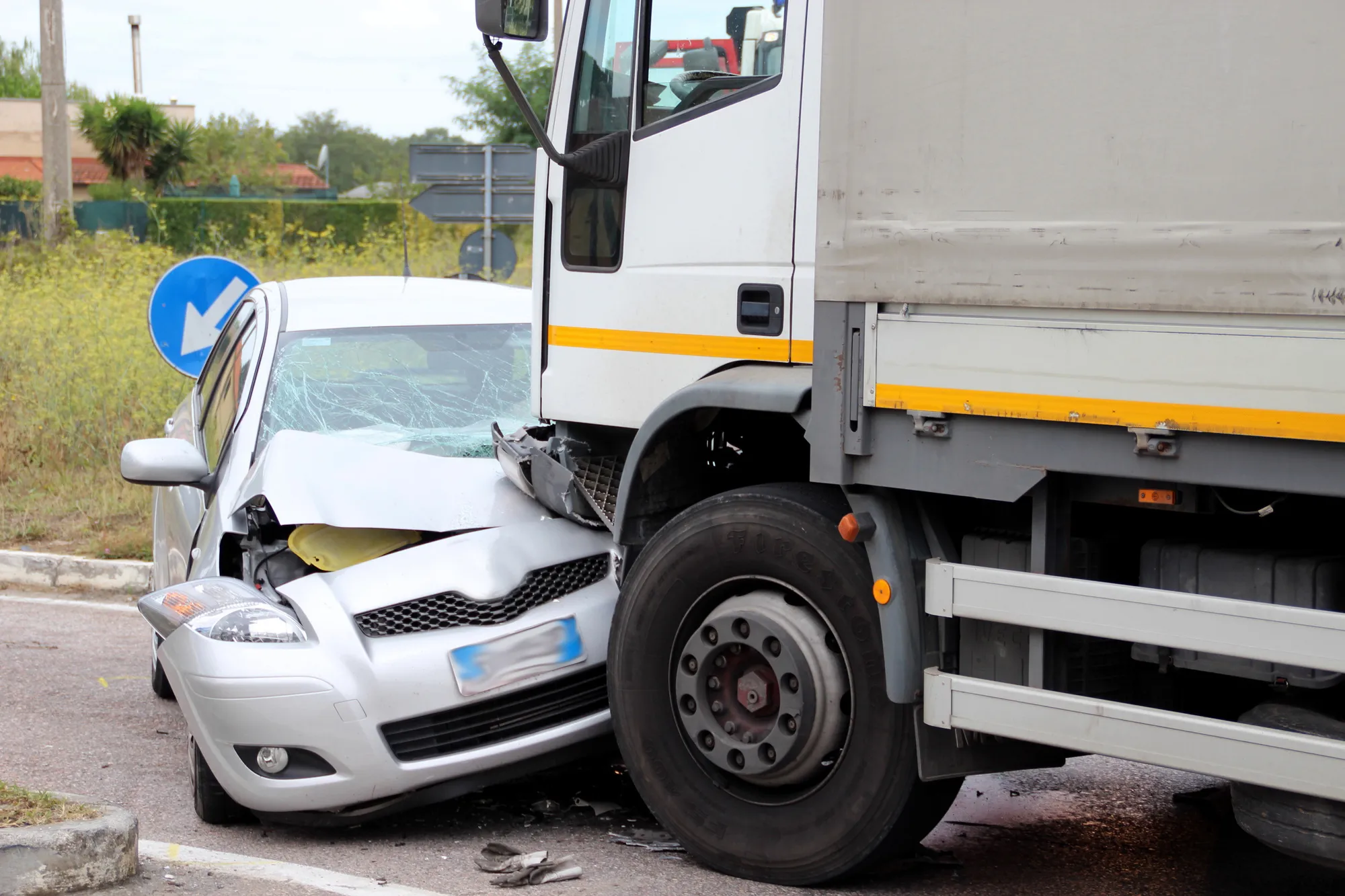
- According to the Insurance Institute for Highway Safety, occupants of passenger vehicles account for 71% of deaths in two-vehicle crashes involving a large truck, due to the mass and stiffness mismatch.
- Georgia's modified comparative negligence rule (O.C.G.A. § 51-12-33) applies, but liability can extend beyond the driver to the carrier, broker, shipper, and maintenance contractor.
Trucking companies are notorious for rejecting claims, knowing that the idea of a legal battle with a giant transportation company is daunting to most people. Or they offer small but seemingly generous, immediate payments, understanding that few people recognize the financial devastation an injury that requires medical attention can bring.
If you have been in a collision involving a truck operated by Swift Transportation, one of the world’s largest trucking companies, contact experienced truck accident lawyers so they can advise you on your legal options.
The Facts About Truck Accidents
Truckers are experienced and excellent drivers. But because they drive so much, statistics show they are involved in many accidents. However, American Trucking Association research reveals that truck drivers are responsible for only around 20% of truck accident cases.
Truck accidents can cause devastating destruction and physical trauma, leading to pain and suffering, lost wages, enormous medical bills, and even death. The vehicle the truck crashes into and its occupants usually suffer the most serious injuries. Still, even in trucking accidents not caused by the truck driver, the company that employs them might share in the blame.
Records reveal that Swift Transportation truck accidents are slightly more common than average in comparison with similar-sized trucking companies.
Data Collection
Because third parties cause so many accidents involving commercial trucks, trucking companies emphasize data gathering to absolve their drivers of responsibility. On a Swift Transportation truck, equipment records the speed, braking, airbag deployment, and other significant data.
The company uses Swift vehicle data to disprove liability, but a personal injury lawyer skilled in data analysis can also find evidence that implicates Swift Transportation. Hiring the right law firm early in the case will help ensure this data is kept and can be sifted through for evidence that might be used to prove that the company actually does share responsibility for the collision.
Not all truck accident attorneys have experience analyzing this specialized data, so checking this qualification is essential in choosing the proper legal representation.
Safety Doesn’t Always Come First for Major Trucking Companies
Drivers’ Pay
There are many ways trucking companies could further reduce the percentage of truck accidents caused by their drivers. The biggest one is to make drivers’ compensation fairer. Presently, Swift drivers are paid according to loads transported or miles driven rather than hours worked. In practice, this means that many truckers are working considerably more hours than are healthy or legal in order to earn a living wage.
While a tired Swift driver might be behind the wheel of a Swift Transportation truck that is involved in a collision, the company that forces them into this position is also culpable. Making a personal injury claim against the company is a good way to call attention to company greed. Successful actions cost them money, so the more actions, the more likely they will start treating truck drivers appropriately.
Drivers’ Qualifications
Most people take for granted that drivers of commercial vehicles are thoroughly trained and vetted. They might be surprised to learn that Swift Transportation actually courts inexperienced drivers and has been found not to take the vetting process as seriously as it should.
New drivers of Swift trucks command lower wages than drivers with more experience, so they are great for profit margins. While it is admirable to give people a chance to learn a profession, driving a heavy-duty truck on a busy highway might not be an ideal first step in a driving career.
Swift Transportation has also been cited for employing experienced drivers fired from other driving jobs, with suspended licenses, or who have failed medical examinations.
Swift Transportation’s Responsibility for Crashes Caused by Employees
If an on-duty driver employed by Swift Transportation causes a truck accident, the company is liable, not the truck driver. That’s because Swift Transportation benefits from the driver’s work, so it also assumes the risks. This is good news for accident survivors or their families because a big company like Swift can better pay a substantial and fair settlement in a truck accident claim than an individual driver.
Independent Owner-Operators vs. Employees
The company employs most drivers used by Swift Transportation, so its insurance covers their accidents. However, Swift also uses many independent contractors. Some of these tractor-trailer owner-operators fill in for odd jobs, while others work more or less full-time for the company.
Swift’s insurance policy may not cover an accident involving a tractor-trailer driver classified as an independent owner-operator. That doesn’t mean that Swift Transportation can necessarily walk away from any responsibilities, though.
There are circumstances in which Swift could still be held accountable. These include the driver being incorrectly classified as independent, the trailer belonging to Swift Transportation, not the tractor owner, or problems with the cargo. Experienced truck accident lawyers will be able to uncover the facts about liability and responsible parties.
Calculating Settlements
Settlements for accidents involving Swift Transportation tractor-trailers depend on several factors. The most important is the type of injury and the type of accident.
Injuries
Injuries suffered in Swift truck accidents range from pulled muscles to death. The amounts the insurance companies will pay depend partially on the severity of the injury. For insurance purposes, injuries are classified as Levels I, II, and III, with Level I being the least severe. Payouts from insurance companies have top limits that may not cover the expenses and suffering of the most severe injuries.
Some injuries are obvious, while others are harder to prove. For instance, a shoulder injury could be a break, which is impossible to deny because of x-ray evidence, or a strain, which can be very painful but harder to prove. Indeed, insurance companies will dispute claims if they can. However, the other important factor, the type of accident, can make this more difficult.
Type of Accident
Different types of collisions have different characteristics, including the injuries commonly associated with them.
Head-On Collisions
The most severe type of auto accident is when two vehicles moving directly towards each other collide. The impact of these collisions is significant, especially when the vehicles are traveling at high speeds. Many road deaths occur as the result of head-on collisions. These collisions generally result in the most seriously injured individuals and the highest settlements. Fortunately, they are the least common type of accident.
Side-Impact Collisions
These are also called “sideswipes” and “broadsides” and are responsible for about one-third of traffic deaths. This figure is so high because the side of a vehicle offers drivers and passengers less protection than any other part. The settlement in a side-impact crash depends on the injuries incurred. However, these are among the most challenging cases to establish liability. Each driver involved may feel they were in the right. A lawyer in these cases often has to turn to witnesses and physical evidence to prove a client’s case.
Rear-End Collisions
These occur when one vehicle crashes into another in front of it. At low speeds, these accidents commonly cause whiplash. These types of accidents generally result in low settlements. However, if the read-end collision happens at high speeds, the damage to the forward vehicle can be significant, sometimes pushing it into the car ahead and sandwiching the driver. If the injuries are more severe and cause the sufferer more significant medical expenses, the settlement could be much higher.
Contact Us
As you can see, establishing responsibility and gaining fair compensation for an accident involving transportation companies can be complicated. If you or a loved one have been in a collision involving the Swift Trucking Company, call a lawyer at Georgia Auto Law. As auto law professionals, we can advise you of your rights and suggest possible ways to proceed with legal action to claim compensation for your personal or material losses. Our legal advice is available 24 hours a day, seven days a week.
To learn more about the services we offer, call 404-662-4949 today.
Frequently Asked Questions
How long do I have to file a Georgia truck-accident claim?
Two years from the date of the crash under O.C.G.A. § 9-3-33 for personal injury. Cargo or property claims have four years under O.C.G.A. § 9-3-32. However, evidence-preservation letters to the carrier should go out within days to prevent logbook and ELD data from being overwritten.
Can I sue both the truck driver and the trucking company?
Yes. Under Georgia respondeat superior law, the trucking company is generally liable for the driver’s on-duty negligence. The carrier also has independent duties to inspect, train, supervise, and route — violations of those duties create direct claims against the company beyond the driver’s actions.
What evidence is unique to truck-accident cases?
Federal regulations from the Federal Motor Carrier Safety Administration require commercial carriers to maintain driver logs, hours-of-service records, electronic logging device (ELD) data, drug and alcohol test results, maintenance records, and post-crash inspection reports. These records have short retention periods and must be preserved by formal demand.
How much insurance do trucking companies carry in Georgia?
Interstate commercial carriers must maintain at least $750,000 in liability coverage under FMCSA regulations — far above the Georgia auto minimum of $25,000. Many carriers exceed the federal floor and carry $1 million or more, which is why truck-crash recoveries can be substantially larger than passenger-vehicle cases.